

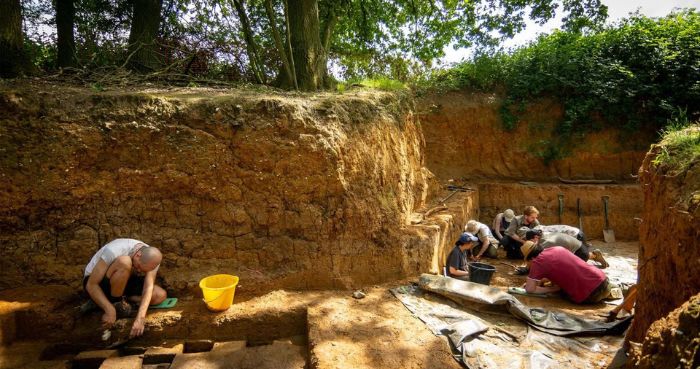
New research reveals that Neanderthals mastered the control of fire approximately 350,000 years earlier than previously believed. This groundbreaking discovery, made through archaeological findings in Europe, reshapes our understanding of early human innovation and survival strategies.
Neanderthals and the Ancient Control of Fire
A recent study conducted by an international team of archaeologists analyzed tools and burnt remains at the Charcoal Pit site in southern Europe. The evidence suggests that Neanderthals were actively using fire around 400,000 years ago, pushing back the timeline significantly from earlier estimates.
This finding challenges prior assumptions that early humans only controlled fire around 50,000 years ago, shedding light on the advanced capabilities of Neanderthals long before the emergence of modern Homo sapiens.
Background and Significance
Understanding fire use is crucial as it links to cooking, protection, and social development. Neanderthals’ command of fire potentially aided in their ability to survive harsh climates and expand across diverse environments.
Experts highlight that “the ability to make and sustain fire reflects cognitive and cultural complexity that modern humans only acquired much later,” noted Dr. Sarah Khan, a paleoanthropologist associated with the study. “This pushes back the narrative about human progress and the evolutionary story.”
Implications for Archaeology and Human History
The discovery directly impacts global discussions, including those related to social media trends in paleoanthropology and tech news Pakistan, where digital platforms increasingly highlight breakthroughs in science and heritage.
It also intersects indirectly with global diplomacy, as countries collaborate on preserving such ancient sites and further examining human origins.
Latest Updates and Regional Relevance
While this research focuses on prehistoric Europe, the implications resonate globally, including in Pakistan’s academic and scientific communities. The study encourages further exploration of regional sites for early human activity.
In parallel, with breaking news Pakistan often featuring advancements in various fields, this revelation adds to the expanding knowledge base that influences education and research policy decisions.
The latest development indicates ongoing excavations at adjacent sites promising more insights into early human innovation and migration patterns.
Don’t miss a moment—catch all the latest news only on Faiz.tv.