
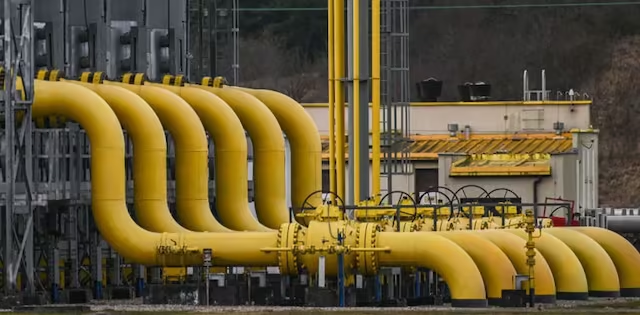
The European Union (EU) has reached a landmark agreement to completely phase out Russian gas imports by the end of 2027, marking a major shift in the bloc’s energy policy amid ongoing tensions over the war in Ukraine. The move aims to strengthen energy independence and accelerate the transition toward renewable sources.
EU’s Move Toward Energy Independence
EU energy ministers finalized the decision after months of negotiations, agreeing to gradually reduce and ultimately eliminate all purchases of Russian natural gas within the next two years.
The policy reflects growing pressure on member states to cut economic ties with Moscow and reduce reliance on fossil fuels that have historically powered European industries.
“Europe must never again be dependent on a single supplier for its energy security,” said EU Energy Commissioner Kadri Simson.
Impact on Russia and Global Energy Markets
The decision is expected to significantly affect Russia’s energy revenue, which has been a key source of funding for its war in Ukraine.
Analysts predict that global gas markets may experience short-term volatility, but EU diversification efforts—including deals with Norway, the U.S., and Qatar—are likely to stabilize supply.
Boost for Renewable and LNG Projects
The EU plans to replace Russian gas imports with liquefied natural gas (LNG) and expand renewable energy infrastructure across member states.
New investments in wind, solar, and hydrogen projects are already underway as part of the REPowerEU initiative, designed to ensure affordable and sustainable energy for all Europeans.
“This is not only a geopolitical necessity but also a green transition opportunity,” said Germany’s Vice Chancellor Robert Habeck.
Challenges Ahead
Experts warn that certain Eastern European countries, which still depend heavily on Russian gas pipelines, will face challenges in adjusting their energy systems.
EU funding and technical assistance will be provided to help them upgrade storage facilities and diversify supply routes.
Conclusion
By setting a 2027 deadline to end Russian gas imports, the EU has signaled a historic turning point in its energy policy—balancing security, sustainability, and solidarity. The bloc’s shift away from Russian energy underscores Europe’s determination to build a cleaner and more resilient energy future.
Follow Faiz.tv for global energy and policy updates.