

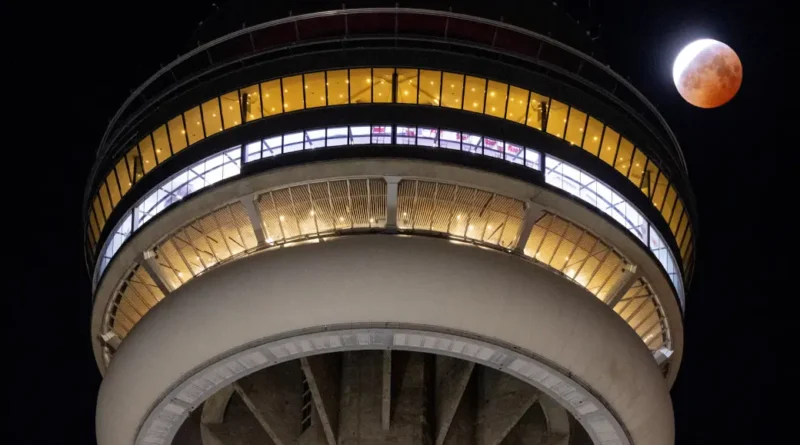
‘Blood Moon’ Visible Across Canada Overnight, Early Morning: NASA
A spectacular “blood moon” illuminated skies across Canada overnight and into the early morning hours, according to NASA.
Skywatchers across multiple provinces witnessed the rare celestial event as the Moon turned a deep reddish hue during a total lunar eclipse.
What Is a Blood Moon?
A blood moon occurs during a total lunar eclipse when the Earth moves directly between the Sun and the Moon. As a result, Earth’s shadow blocks direct sunlight. However, some sunlight still filters through Earth’s atmosphere, casting a red glow on the Moon.
This atmospheric filtering effect gives the Moon its dramatic copper‑red appearance.
When Was It Visible?
NASA reported that the eclipse began late at night and reached totality in the early morning hours. Therefore, observers who stayed up late — or woke up early — were treated to the most vivid phase of the event.
Clear skies in several regions allowed for optimal viewing conditions.
Why the Moon Turns Red
The red color appears because Earth’s atmosphere scatters shorter blue wavelengths of sunlight while allowing longer red wavelengths to pass through. Consequently, the same effect that produces colorful sunrises and sunsets also creates the blood moon glow.
What’s Next?
Although total lunar eclipses are not extremely rare, each event offers a unique viewing experience depending on atmospheric conditions and geographic location. NASA encourages astronomy enthusiasts to track upcoming celestial events through official space agency updates.
Conclusion
The blood moon over Canada provided a stunning reminder of the beauty and predictability of cosmic events. As interest in astronomy continues to grow, such spectacles capture public imagination and inspire skywatchers worldwide.
Stay connected for more science and space updates.