
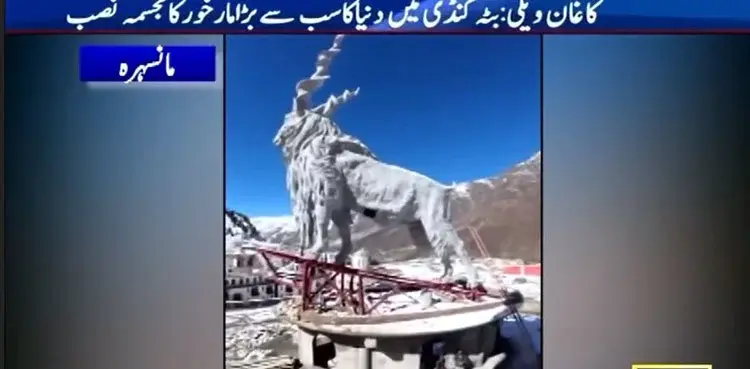
KAGHAN: The world’s largest Markhor sculpture has been officially installed in the scenic Kaghan Valley, marking a historic milestone for cultural symbolism and tourism promotion in northern Pakistan. The giant artwork is attracting visitors, photographers, and wildlife enthusiasts from across the country.
The installation is part of Pakistan’s efforts to highlight its national heritage, wildlife conservation message, and boost adventure tourism in the Himalayan tourism belt.
A Landmark for Northern Pakistan Tourism
The grand sculpture represents:
Pakistan’s natural heritage and national pride
A growing focus on wildlife conservation
Tourism branding for northern regions
Cultural identity linked to mountainous ecosystems
Local authorities believe the Markhor sculpture will become a new iconic attraction alongside the famous landscapes of Kaghan.
A regional tourism official stated:
“This sculpture will serve as a signature identity for Kaghan Valley and encourage both domestic and international tourism.”
Design and Craftsmanship
The sculpture is:
Built using weather-resistant materials to withstand extreme mountain climate
Designed by a team of local artisans and creative engineers
Installed at a strategic viewpoint popular with travelers
Social media influencers have already begun sharing visuals of the structure, helping the sculpture trend on:
TikTok
Instagram
Experts say visual storytelling of national symbols like the Markhor has strong engagement potential, making it a branding asset for eco-tourism.
Tourists React
Visitors in Kaghan expressed excitement, calling it:
“A must-visit landmark”
“A symbol of national identity”
“A new era of tourism sculptures in Pakistan”
Families and travelers heading toward Naran are frequently making stops to capture photos, helping local businesses around the valley witness increased footfall.
Conclusion
The installation of the world’s largest Markhor sculpture in Kaghan Valley is expected to strengthen Pakistan’s tourism visibility, cultural messaging, and wildlife appreciation. Authorities hope it will become a permanent symbol of national pride and northern tourism identity.
Follow Faiz.tv for more lifestyle, culture, tourism, and Pakistan heritage updates.